
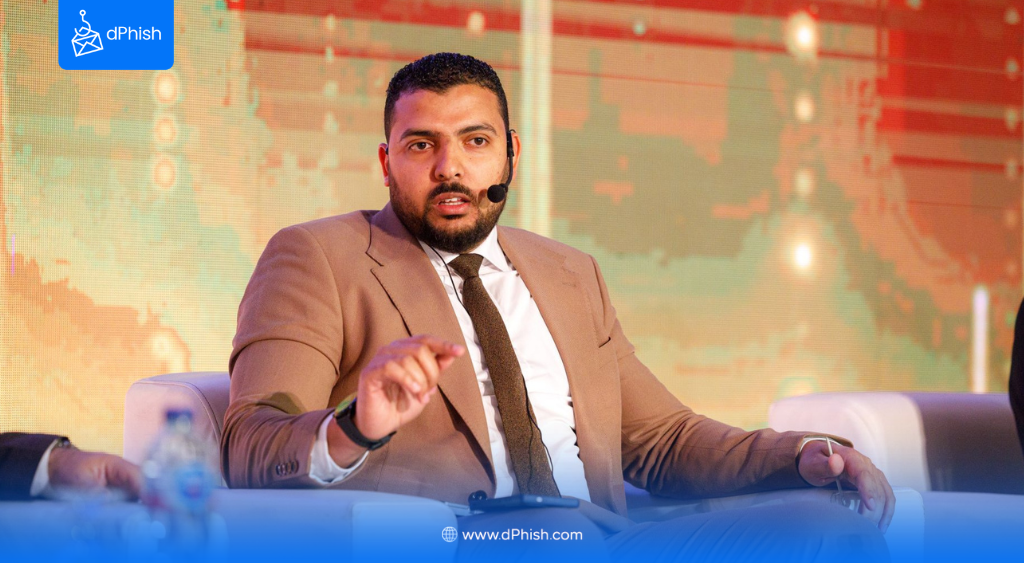
During his panel session at Libya Tech Forum 2026, our Co-Founder & CTO, AbdElnaser Khanafeer, explored the rise of Agentic AI and its growing role in transforming cybersecurity operations. The discussion focused on what makes these intelligent systems “agentic”—their ability to make decisions, take actions, and execute complex security workflows with minimal human intervention.
The session also highlighted how intelligent automation is enabling end-to-end security operations by accelerating threat detection, phishing detection, and incident response. From identifying phishing attempts and analyzing malicious activity to streamlining investigations and reducing response times, these technologies are helping security teams operate with greater speed, accuracy, and efficiency.
As cyber threats continue to evolve in sophistication and scale, organizations are increasingly adopting advanced technologies that strengthen security operations without replacing human expertise. Modern security platforms can detect emerging threats, prioritize incidents, automate repetitive workflows, and respond more effectively to phishing attacks and other advanced cyber risks.
A key takeaway from the discussion was that AI is not replacing cybersecurity professionals. Instead, it acts as a force multiplier, empowering security teams to make better decisions, respond faster to evolving threats, and focus on strategic challenges that require human judgment and expertise.
At dPhish, we believe the future of cybersecurity lies in combining human intelligence with AI-powered capabilities to deliver more effective anti-phishing solutions, strengthen cyber resilience, and help organizations stay ahead of increasingly sophisticated threats. By leveraging advanced phishing detection, threat intelligence, intelligent automation, and security analytics, organizations can build more resilient security operations and improve their ability to prevent, detect, and respond to modern cyberattacks.
Thank you to everyone who joined the session and contributed to the discussion. It was great connecting with so many of you at Libya Tech Forum 2026, and we look forward to continuing these conversations about the future of AI in cybersecurity and cyber defense.